Grinding noise means metal parts are rubbing where they should slide or roll freely. In an Oceanside attached garage, that sound almost always comes from the roller and track system or the shaft the springs wind around. Squealing points to dry hinges; grinding points to something wearing down under load. Catching the cause early, before the sound turns into a stuck door on a Rancho Del Oro morning, keeps a small fix from becoming a full track replacement.
Rollers Dragging in the Track
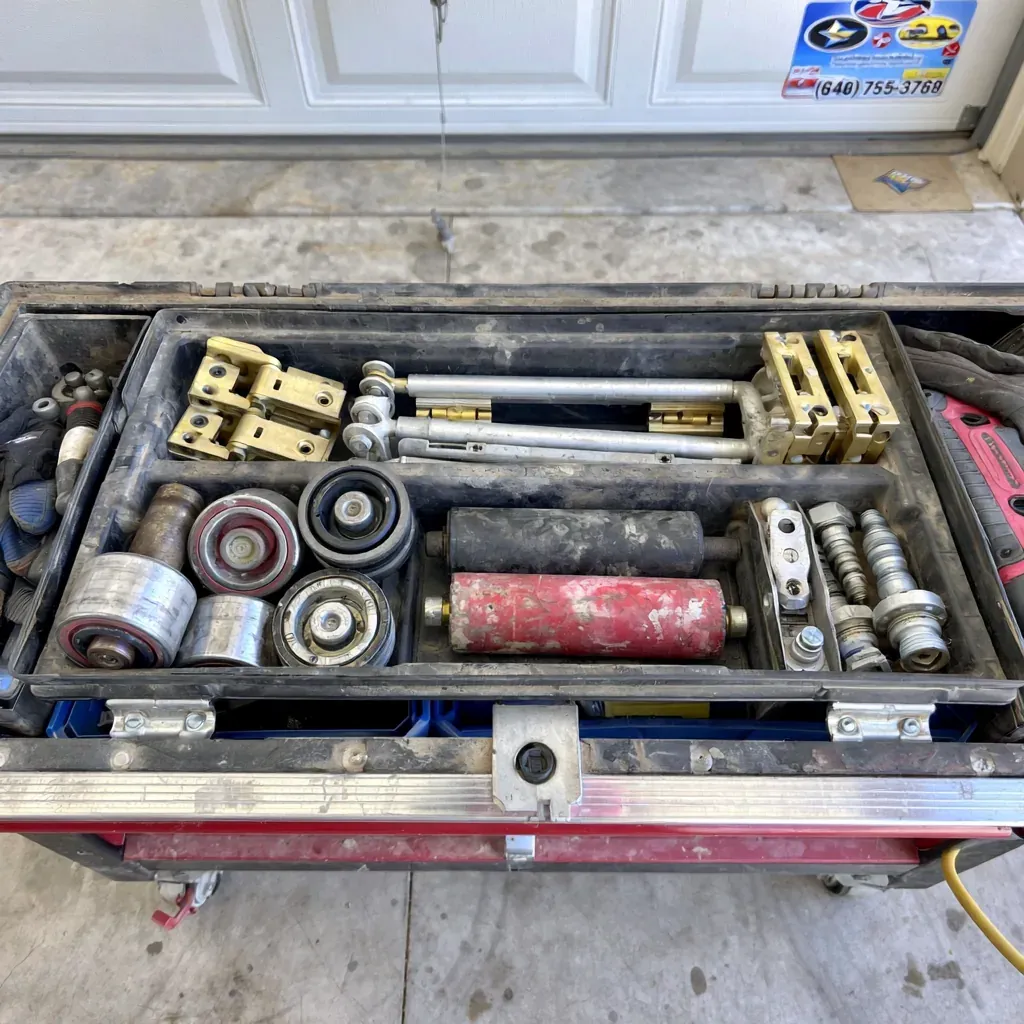
The rollers riding your track in an attached two-car garage are steel or nylon wheels on a stem, and they wear unevenly after enough cycles up and down. Once the wheel surface flattens or the bearing seizes, it stops rolling smoothly and starts scraping the track wall instead. That scrape is the grinding sound Oceanside homeowners notice most on the last few feet before the door seats, since that's where the track curves and any dragging wheel fights the bend hardest.
Worn Bearings on the Shaft
The torsion shaft that holds the springs spins inside end bearing plates mounted above the door on the header wall. Those plates carry constant rotating weight, and the bearing surface inside them can dry out over years of use. A shaft turning inside a worn plate makes a steady grinding sound tied to the door's speed, not its weight, and it will not go away with more lubricant alone.
A Grinding, Slow-Moving Opener
An opener that grinds while barely turning, or turns without moving the door at all, usually has a worn or stripped gear inside the motor housing. Plastic drive gears in older units wear down faster than the metal parts around them, and a failing gear grinds under load even when the door itself is balanced and free-moving. This is separate from a track or roller problem, and no amount of oiling the track will quiet it.
Hinges That Bind on Each Cycle
Hinges take a beating too, since each one pivots as the panels fold going up and flatten coming down. A hinge pin that has worn oval instead of round lets the panel rock slightly with each cycle, and that small side-to-side motion grinds metal against metal right where the hinge meets the panel bracket, usually producing a sharper, shorter noise than a bad roller does.
Salt Air Working Into the Hardware
Oceanside sits close enough to the Pacific that marine layer moisture settles on garage hardware most mornings, even away from the coast toward Fire Mountain or Rancho Del Oro. That moisture doesn't need a storm to do damage. It just needs time, working into hinge pins, roller stems, and the torsion spring shaft until surface rust turns rough enough to catch instead of turning freely. A door that ran quiet for years can start grinding simply from that slow buildup, no cracked part required.
Termite Damage Near the Frame
Older wood-frame homes around San Luis Rey and parts of Townsite can carry termite activity in the framing around the garage opening, and that damage sometimes lets the door jamb shift slightly out of true. A track bolted to a jamb that has moved even a little no longer lines up straight with the roller path, so the roller rubs one side of the channel instead of running centered through it, and that rubbing is what grinds.
A Slab Foundation Settling Unevenly
Most houses around Oceanside, from the older San Luis Rey area to newer tracts near Rancho Del Oro, were built directly on concrete rather than over a crawl space or basement. A concrete slab that shifts even slightly with seasonal moisture can pull the track bolts out of true alignment, and a track that no longer sits straight will make rollers grind against its edge no matter how new the hardware is.
Old Grease Turning to Grit
Grease inside a track does not stay clean forever. Over time it picks up dust and hardens into a gummy paste that rollers have to push through instead of rolling over. Homes near Interstate 5 or Coast Highway pick up road dust on top of the coastal salt film, so the grease turns gritty faster there than it might further inland near Bonsall or Fallbrook, where the air carries less of both.
HOA Rules Before Replacing Parts
Some Ocean Hills communities require architectural approval before a resident swaps a track, opener, or panel, since the visible hardware on a shared street can fall under community design rules. Before scheduling replacement work in one of these communities, it helps to check the HOA paperwork first, since a grinding fix that changes the door's appearance can get flagged after the work is already done.
Reading Where the Grinding Sits
Grinding low, near the bottom section, usually means the bottom rollers or hinges are carrying the wear, since they take the most weight on every open. Grinding higher up, near the header where the door curves into horizontal track, points more toward the top rollers or the spring assembly overhead. Track a South Oceanside or Townsite home's noise to its height on the door before guessing at the cause. That single detail narrows the list faster than listening to the sound alone.
When to Stop Running the Door
A grinding sound alone is worth watching for a few cycles, but stop using the door if the grinding comes with a panel that visibly wobbles, a roller that has popped partway out of the track, or a door that jerks instead of gliding. Continuing to run a door in that state near Mission Avenue or anywhere else risks a roller jumping the track completely, which turns a repair into a bigger job.
Dealing with this in your home?
Oceanside sits low where the San Luis Rey River meets the coast, and neighborhoods near Guajome Lake or Loma Alta Creek see slabs shift after a wet winter, pulling tracks out of line. Add salt air rolling off the Pacific past the Oceanside Pier and springs rust faster than inland Escondido ever sees.