Faults
Came Off the Track
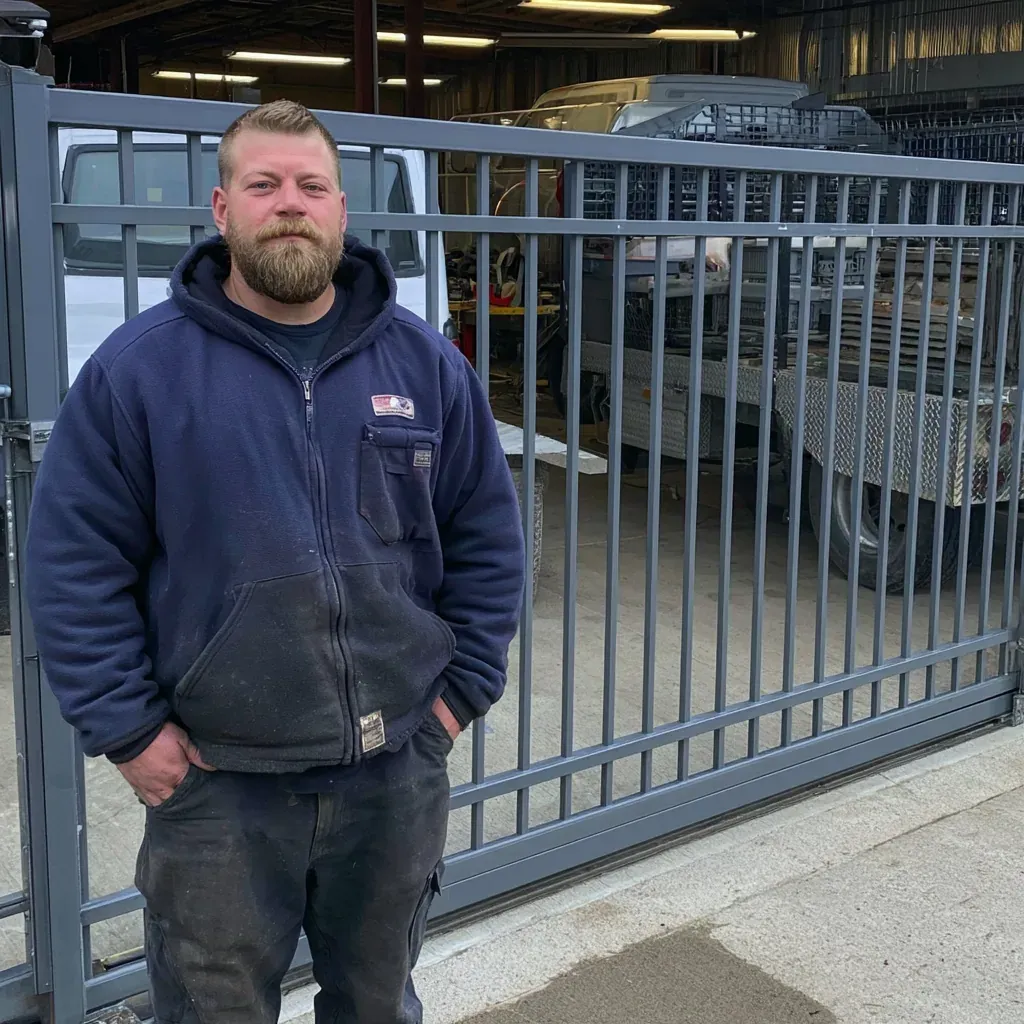
An Oceanside garage door with a roller sitting outside its track, hanging crooked or stuck mid-travel, points to a derailed roller, a bent track, or a loose flag bracket, not a broken spring.
Read article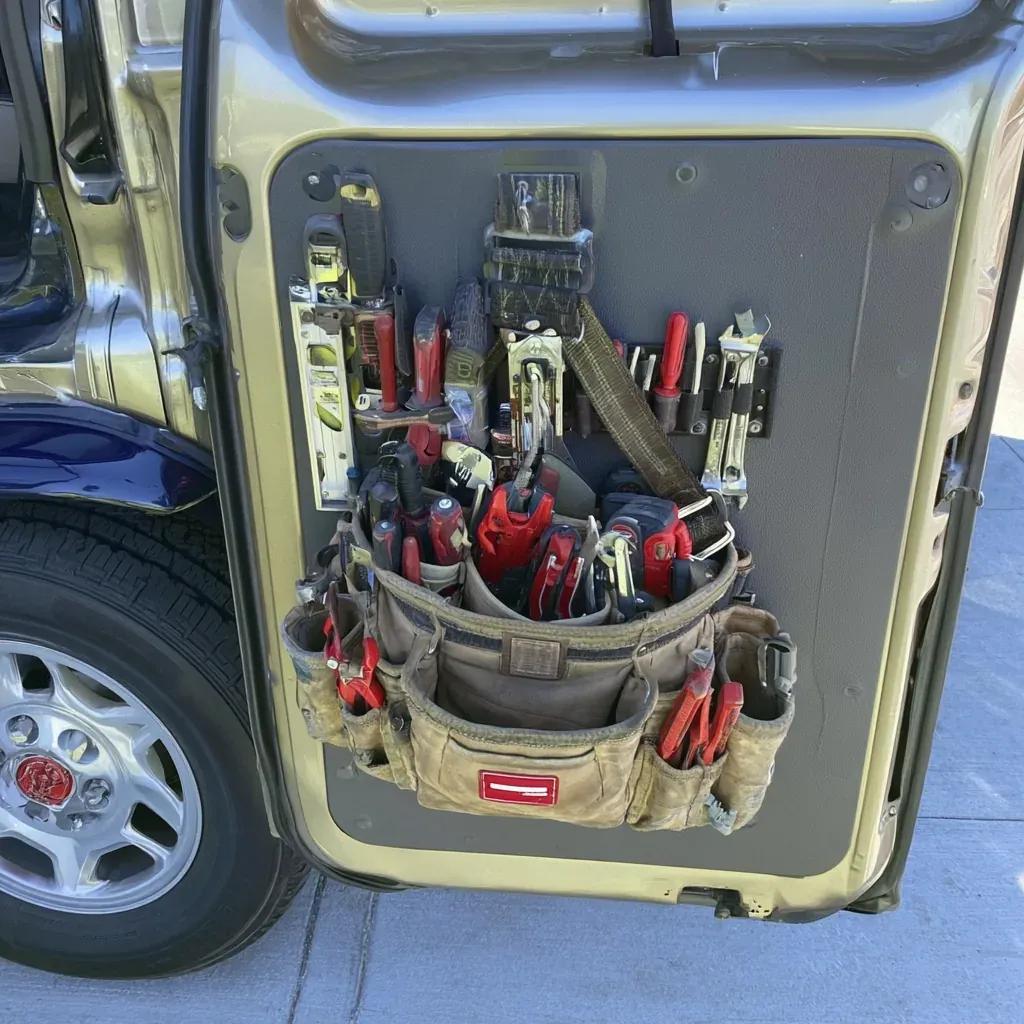
One cracked hinge, one sagging joint, fixed fast.
A garage door that dips at one corner while the rest of the panel looks straight usually points to one hinge, not the whole door. In Oceanside stucco homes from Townsite to Rancho Del Oro, that dip shows up at a section joint, where a bolted bracket lets one panel pivot against the next. Left alone, the joint keeps flexing on every cycle until the leaf splits.
Hinges take the bending load every time an attached two-car garage door opens and closes, and coastal humidity off the Pacific speeds up the wear on the pivot pin. Homeowners from South Oceanside to Ivey Ranch often notice the problem first as a scrape or a shudder partway through the cycle, right where a cracked hinge lets the section catch instead of rolling smooth through the track.
Broken Hinge Replacement in Oceanside, CA is not one job with one price, whether you're in Fire Mountain, Loma Alta, San Luis Rey, or elsewhere around Oceanside, and the work is matched to the building and to the way water actually moves through it here. That is what separates a lasting repair from a temporary one.
This is most often a home job — residential garage door repair sets out what that involves, or see commercial garage door repair if the property is a business or a rental.
Open the door partway and look across each section joint from inside the garage. A hinge leaf bolts flat across the face of two panels, and once a crack runs through that metal, the joint it holds stops moving as one piece. The section rocks slightly instead of pivoting clean, and the bracket that should keep the two panels level starts to work loose with every open and close, especially on older steel doors around Fire Mountain and Loma Alta.
Watch the gap where one section meets the next as the door climbs toward the header in an Oceanside attached two-car garage. A wedge that opens only there, right as the panel rolls from vertical onto the curved rail, means a hinge leaf is bending under the pull instead of holding the joint square. Ignore it and that same joint keeps flexing until the leaf splits clean through.
Pull a hinge pin and check the leaf around it for an orange bloom before you check for a crack. Coastal humidity off the Pacific reaches attached two-car garages throughout Oceanside, and it works into the pivot faster on doors facing the water than on ones set back near Rancho Del Oro or San Luis Rey. Rust there weakens the metal quietly, long before a split is visible.
The pro works down the door hinge by hinge, checking each pivot pin and section joint for a crack, rust at the leaf, or play in the bracket, and notes the hinge number where the failure sits before pulling any tools.
The section is braced so it can't drop once the failed hinge comes loose. Working by hinge number, the licensed pros we connect you with back out the bolts holding that bracket to its two panels, leaving the spring and cable system untouched while the joint is exposed.
A replacement hinge sized to that exact position and to the door's weight goes in next. A leaf built for the top of the door won't hold up where the middle hinges carry more load through the curve, so matching the number on the old bracket matters.
With the new bracket bolted down, the door runs through several full cycles while the section joint is checked for sag, uneven closing, or play at the pivot. Neighboring hinges get a look too, since one cracked leaf often means others are close behind.
Oceanside's older sections, from Townsite through Fire Mountain, mostly carry steel sectional doors that have logged years of daily open-close cycles on the same hinge hardware. Each cycle flexes the joint a little more, and salt air off the Pacific speeds the corrosion that weakens a hinge pin before the leaf itself ever shows a visible crack. A joint that fails outright, rather than wearing gradually, is usually a hinge problem, not a panel problem.
Oceanside's housing stock runs from older stucco homes in Townsite and Downtown Oceanside, built well before newer tracts, out through Rancho Del Oro and Ivey Ranch, where attached two-car garages became standard. Steel sectional doors with bolted hinge joints show up across most of that range, and the age of the hinge hardware often tracks the age of the neighborhood more closely than the age of the door panels themselves, since hinges get swapped out on their own schedule.
A door in Fire Mountain and a door near Guajome Regional Park see different loads on the same hinge. Salt-carried air off the coast pits the leaf and pin faster on homes closer to the water, while inland garages near Morro Hills wear more from heat cycling on the section joint and stucco expansion around the frame. Either way, the bolted bracket takes the strain first.
These guide figures for broken hinge replacement vary with the door, the failed part, and the work found to be necessary.
| Common Setting | Slab Or Crawl Space | Also Worth A Look |
|---|---|---|
| A track set dead level at installation doesn't necessarily hold that line for good. The structure around it can shift by small amounts over the years, and a door that once ran smooth may start catching without any single obvious cause. | Opener force check, drum inspection, weatherstrip look-over for slab homes | an estimated $100–$365 |
| Grease that flows easily on a warm afternoon can thicken just enough by evening to slow a roller down, and the opener reads that extra drag as a heavier door than it's actually pulling. | Two-spring replacement, galvanized cable swap for Fire Mountain hillside doors | an estimated $120–$525 |
| By the time an opener's gear shows bare plastic teeth, it has been shedding material for a long stretch already. Whatever made the motor work that hard in the first place is still there, waiting to cause the next failure. | Bent track section replaced, carriage realignment, roller lube included | an estimated $180–$840 |
| Steel losing tension rarely gives fair warning. A spring worn down by ordinary use tends to snap during a stretch of frequent cycles rather than fading out slowly, which is why it always seems to happen at the worst moment. | New door, opener setup, corrosion-resistant hardware for slab homes near the coast | an estimated $285–$1395 |
A door that won't budge and a door that just runs rough are different calls with different price tags, and the difference usually comes down to how much load was still on the system when it failed. Full failure under tension costs more than a slow slide toward one.
No. A hinge is the bolted bracket that lets two sections pivot at their joint, not the panel itself. Once the licensed pros we connect you with confirm the leaf or pin is what failed, swapping that hinge is a bolt-out, bolt-in job on the section, not a door replacement, and it's usually done the same visit.
Hinges are numbered from the bottom of the door up. In Oceanside garages, hinge number two and three take the worst of it, since those section joints ride through the curved part of the track where the door changes from vertical to horizontal. That's where cracks and sag show up first. The licensed pros we connect you with check those positions before anything else.
Once a hinge leaf shows a crack or the bracket pulls away from the panel face, stop running the door. That joint has already lost some of its grip, and every open and close bends the metal a little further until it snaps mid-cycle. Homeowners near South Oceanside and Loma Alta who wait usually end up with a stuck door instead of a quick bracket swap.
A single section sagging while the rest of the door tracks straight almost always means the hinge at that joint has cracked or its bracket backed out of the panel. It stays contained to that one joint unless it's ignored, since the sections above and below it are still pivoting on hardware that's holding.
Yes. Insulated and carriage-house doors are common on newer stucco homes around Rancho Del Oro and San Luis Rey, and they weigh more per section than a standard steel door. That extra weight stresses each hinge leaf and bracket harder on every open and close cycle, so hinges wear and crack sooner than they would on a lighter door.
Most Oceanside HOAs govern paint, panel style, and visible trim, not the brackets bolted to the back of the door where hinges sit. A hinge swap in Ocean Hills or Ivey Ranch rarely changes anything a board would see from the street. Homeowners on a deed with strict architectural review should still check their CC&Rs before scheduling work.
As a guide, broken hinge replacement here has an estimated range of $119–$349 for this work. Confirm what is included, what is separately priced, and any visit charge before work begins.
Weatherstripping along the bottom panel does more work than most homeowners realize, keeping runoff and debris out of a space that sits at grade with no drainage lip. Once it cracks or flattens, water finds the seam and the panel underneath starts absorbing what it was never built to hold.
An Oceanside garage door with a roller sitting outside its track, hanging crooked or stuck mid-travel, points to a derailed roller, a bent track, or a loose flag bracket, not a broken spring.
Read article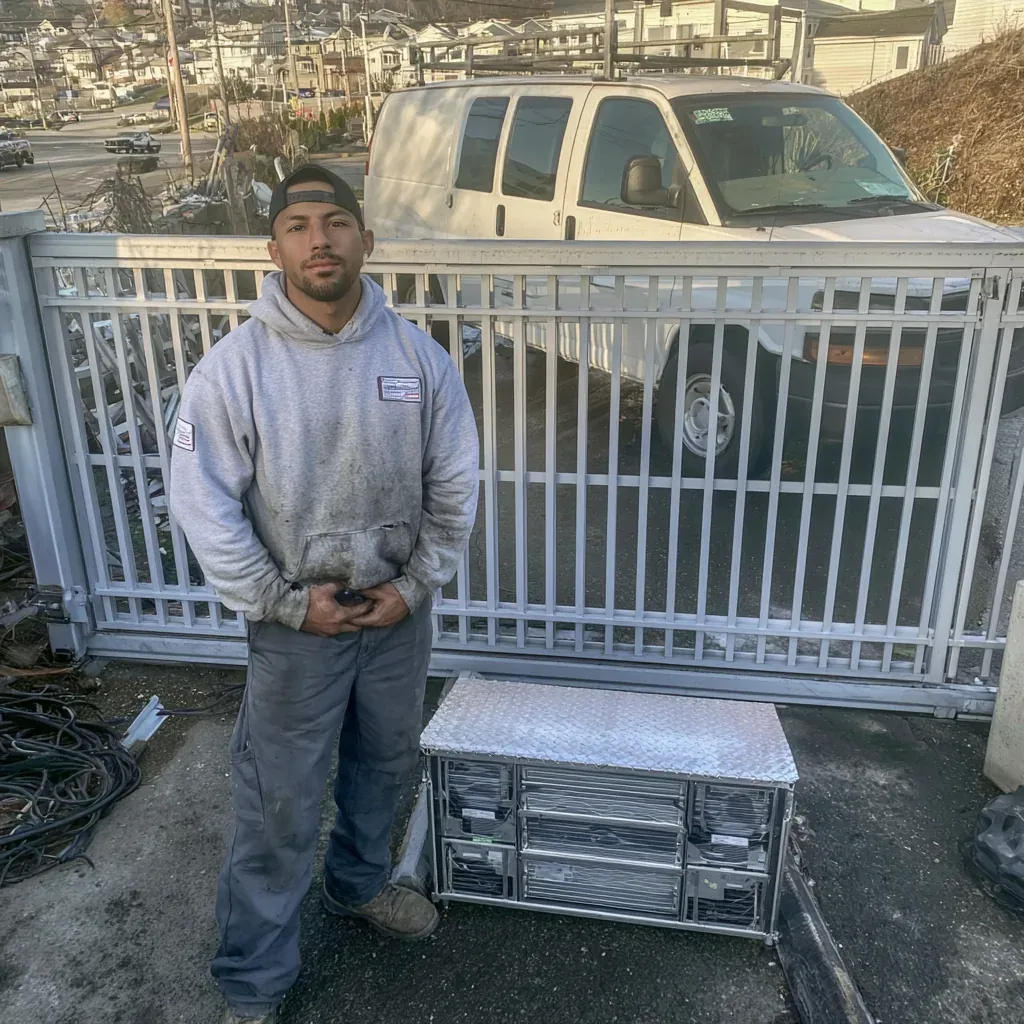
One side hanging low is rarely the panel itself. Look first at where the cable meets the bottom bracket and at the drum it winds onto. A misfed wrap or a cable that jumped its groove will pull the door crooked long before anything looks broken.
Read article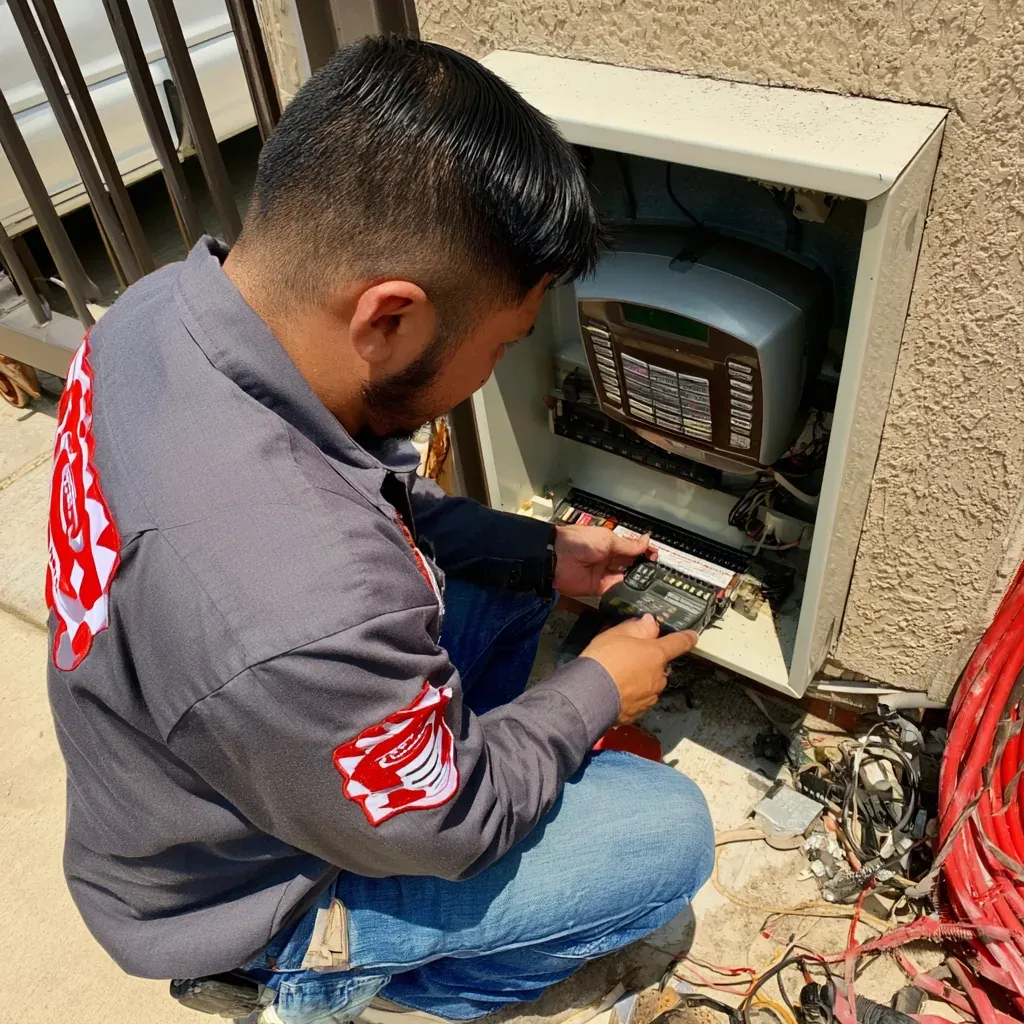
Galvanized hardware protects garage door hinges and springs from rust, but Oceanside's salt air wears that coating down faster than most homeowners expect.
Read articleSome garage door problems show up often enough in Oceanside that a single detailed page earns its place instead of getting folded into a broader list. This one usually starts small, gets ignored through a few open-and-close cycles, and then fails at an inconvenient moment. Knowing the early signs, and what typically causes them here, means a homeowner near Fire Mountain or Rancho Del Oro can describe the problem clearly before a repair call, which speeds up the diagnosis.
Call (760) 273-7064