A garage door stuck open in Oceanside usually happens mid-cycle, not at rest. The door climbs partway, stalls, and will not finish the run either direction. That leaves an attached garage exposed on a street just off Coast Highway or inland near Rancho Del Oro, with the opening wide enough for anyone or anything to walk through. Before touching the opener again, the goal is to understand why it stopped, not to force it the rest of the way up or down.
What Stalls It Mid-Travel
A door hanging open partway usually means the travel limit or a safety sensor is confused, not that the whole opener quit. Photo-eye sensors near the track bottom get knocked out of alignment or blocked, so the opener refuses to close and reverses instead. Worn rollers binding in the track, a cable that jumped its drum, or a spring losing tension partway through the lift can also stall it mid-travel. In Oceanside's salt air, galvanized hardware and roller bearings corrode faster than inland, which speeds up this kind of failure on older tract homes.
The Broken Spring Signal
Do not try to force the door down by hand or lean into it with a car bumper. A torsion spring under tension holds a couple hundred pounds of pull, and a snapped cable can whip loose with enough speed to cut skin or break a finger. If the door will not budge with light, steady pressure, stop and secure the opening instead of pushing harder.
Checking the Opener's Limits
Openers use a set travel limit to know how far up is fully open. If that setting has drifted, or a wire to the unit has loosened, the door can stop early and simply sit there refusing to close. This is more likely if the door has recently been serviced or the opener is older. A quick way to tell: does the opener motor still hum or click when you press the button, or does it do nothing at all?
Sensors Reading a False Block
Photo-eye safety sensors sit a few inches off the slab foundation near each track, and dust, cobwebs, or a stray tool in front of one will make the opener think the path is blocked. Wind off the Pacific Ocean can also nudge a loosely mounted bracket out of alignment over time. If the door will not close and the opener's indicator light is blinking, a misaligned sensor is worth ruling out before assuming a bigger part failed.
Using the Emergency Release
Every opener has a red-handled emergency release cord hanging near the front of the trolley. Pulling it disconnects the door from the opener and drops it into manual mode, letting you move the door by hand. This is the standard way to secure the opening if the door is stuck and will not respond to the opener at all, but only pull it once the door is confirmed to be resting on the ground or fully supported, not mid-air.
Why Manual Mode Has Limits
Manual mode gets the door moving, but it does not fix whatever stalled it. If a spring has broken, the door will feel heavy and may not stay up once you lift it by hand, since nothing is left to counter its weight. Trying to force a heavy door down without support can let it drop suddenly. Manual mode is a way to secure the opening for now, not a lasting solution on its own.
Securing an Open Garage
A garage stuck open overnight in Oceanside is a real exposure, especially in neighborhoods like Ivey Ranch or Fire Mountain where an attached garage often connects straight into the house. If the door cannot be closed by hand safely, blocking the opening with a parked vehicle or a temporary barrier is a reasonable stopgap. Leaving it open and walking away is the one option that carries genuine risk to the home.
When the Cause Isn't Obvious
Sometimes nothing looks wrong. The spring seems intact, the sensors are clear, and the opener still runs, yet the door still won't finish closing. That points toward something less visible, like a cable that has slipped off its drum or a roller binding partway down the track. These faults tend to show the same symptom, a stall at the same spot every time, until the specific part is identified.
Coastal Air and Aging Parts
Pull the emergency release cord to switch the door into manual mode only after checking that no one and nothing is under the path, since a spring failure removes the counterbalance holding the panel up. With the door in manual mode, close it by hand if you can, then leave it down to secure the opening overnight. Do not force the opener switch again once it has stalled once; repeated tries strain the same worn point.
What Not to Try Alone
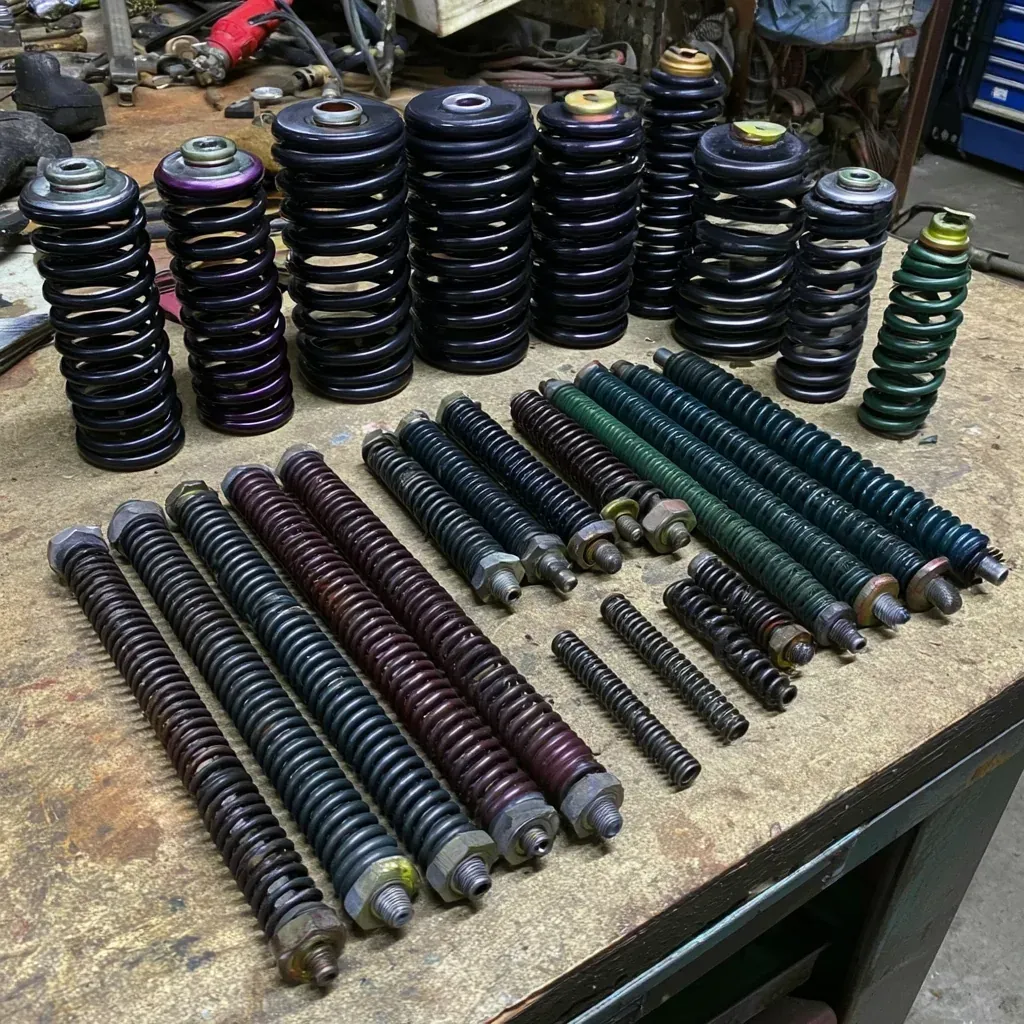
Torsion springs, cables under tension, and anything involving the drums at either end of the shaft are not safe to adjust or replace without the right clamps and bars. A stuck door tempts people to pry, pull, or climb a ladder to release tension by hand, and that is where garage door injuries usually happen. If the fix means touching a spring or cable, that is the stop point for doing it yourself.
Getting the Door Moving Again
A homeowner in South Oceanside with a door frozen halfway up, and a homeowner near Ivey Ranch with a door that will not budge past a foot off the slab, are both describing the same failure with different symptoms. Broken spring tension shows up as a stuck position rather than a clean drop, because cables and tracks still hold the panel loosely in place even after the spring lets go.
Dealing with this in your home?
Oceanside sits low where the San Luis Rey River meets the coast, and neighborhoods near Guajome Lake or Loma Alta Creek see slabs shift after a wet winter, pulling tracks out of line. Add salt air rolling off the Pacific past the Oceanside Pier and springs rust faster than inland Escondido ever sees.