A galvanized torsion spring on an Oceanside garage rarely fails from age alone. It fails because a fine mist off the Pacific settles on the coil every night and never fully dries before the marine layer rolls back in. Homeowners near the Strand or Buccaneer Beach notice pitting on the spring and hinges years before anyone inland would, and by the time it squeaks on every cycle, the rust is already past the surface.
Why Rain Isn't Enough
Rinsing salt film off garage hardware is simple, but timing matters more than effort. A quick hose-down of the tracks, hinges, and bottom bracket after a stretch of onshore wind or heavy marine layer keeps the residue from baking onto galvanized coating in the afternoon sun. Skip the spring itself with direct water pressure; wipe it instead, since trapped moisture in the coils does more damage than the salt did on its own.
What To Actually Rinse
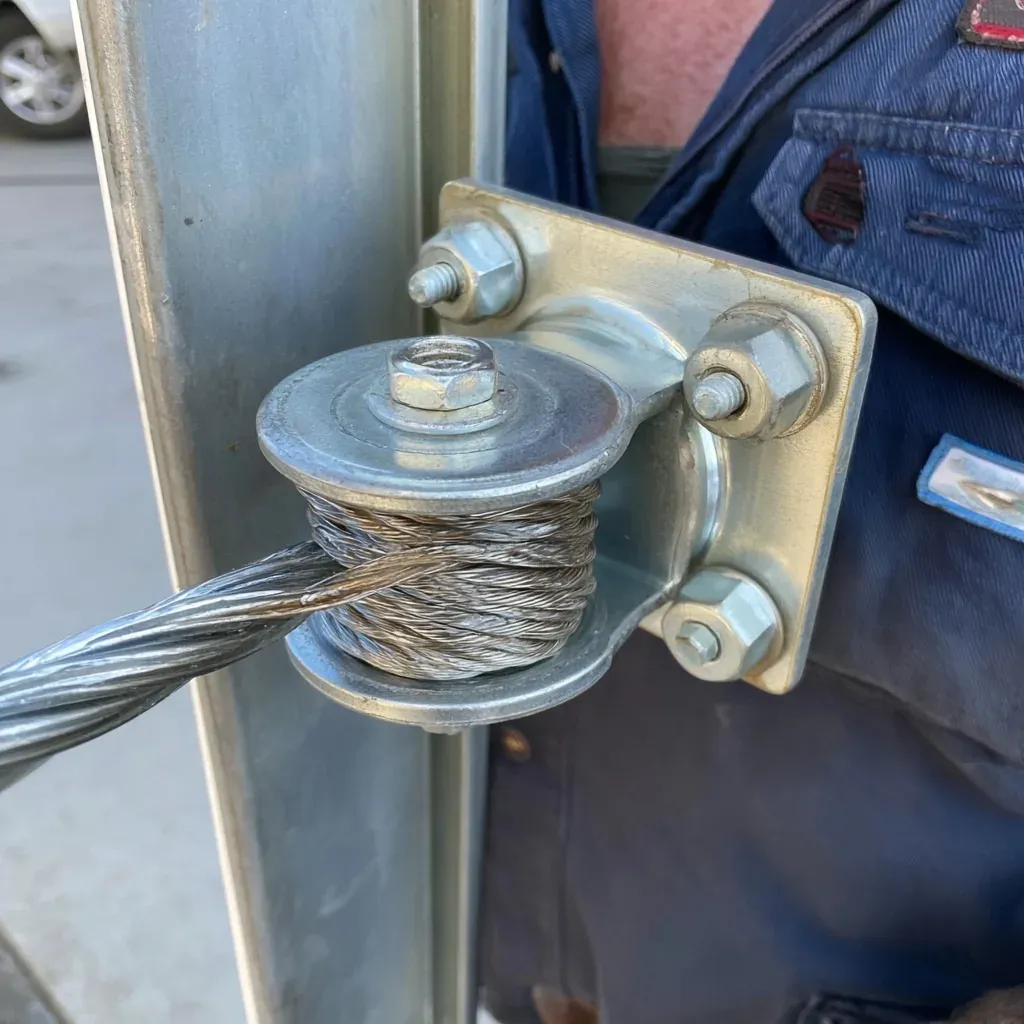
The parts worth rinsing are the ones that flex or spin: the torsion spring above the door, the two tracks running up each side, the roller wheels, and the hinges connecting panels. Hose water with a soft spray attachment reaches most of it without a ladder for a lot of Oceanside garages. Skip a pressure washer on the spring itself; a hard blast can drive water into the coil rather than off it, which does the opposite of what a rinse is meant to do.
How Often It Matters
A short rinse, once every few weeks, does more than a deep clean done twice a year. Salt exposure is constant near Coast Highway and the harbor, and infrequent cleaning lets corrosion get a head start between visits. Plain water from a garden hose is usually enough; a mild soap can help on grease-caked track sections but isn't needed for a straightforward salt rinse. The point is removing residue before it has time to sit against the metal.
Drying Off After Rinsing
After rinsing, dry off standing water where it collects, particularly at the bottom of the tracks and around the spring cones. Water left sitting is worse than salt left dry, since moisture is what actually drives the corrosion reaction forward. A towel or a few passes with a shop rag on the lower track sections handles most of it. Homes closer to the water, like those near the pier or Buccaneer Beach, benefit from this drying step more than a Morro Hills garage set further from the coast.
Lubricating After The Rinse
Coastal humidity keeps the rinse routine relevant even on days without visible salt. Air pulled in off the Pacific carries fine particulate that settles on any exposed metal, not just hardware facing the street. A stucco home a few blocks off Coast Highway collects the same film as one directly on the sand, just slower, so the rinse schedule should follow proximity to the ocean, not just how the door looks that week.
Coastal Blocks Versus Inland
Rollers and the bottom bracket take the worst of it because they sit lowest, closest to runoff and blowing spray. A light rinse followed by a wipe-down keeps grit out of the roller stems, where it mixes with old grease into a paste that grinds the track lining. Homes in Downtown Oceanside and South Oceanside, closest to the harbor and the pier, tend to need this wipe-down on a shorter interval than blocks farther from the water.
When To Stop And Call
Stop the rinse and step back if the spring shows flaking rust, deep pitting, or a coil that looks uneven under tension. A torsion spring holds real force, and one that's already weakened by corrosion can fail suddenly when disturbed. Rinsing exposed rust doesn't fix what's underneath it. That kind of damage calls for a hands-off approach and a look from someone who works on springs regularly, not another round of hose water.
Surface Rust Versus Structural
Surface rust on a track or hinge, caught early, usually wipes or brushes off before it eats into the metal. Once rust has pitted a roller or spun freely inside a hinge pin, though, the part has lost strength it won't get back with cleaning. At that point rinsing keeps things from getting worse but doesn't undo the wear already there. Catching it at the surface stage, rather than after it's structural, is what makes a regular rinse worth the time.
Galvanized Hardware Matters
Galvanized hardware resists salt exposure better than plain steel, which matters when replacing a corroded part rather than rinsing an existing one. A track or spring bought for an inland home may not carry the same coating a coastal Oceanside garage needs. If a rinse routine still leaves visible rust returning within weeks, the hardware underneath may already be bare steel rather than galvanized, and rinsing alone won't change that going forward.
Harbor Side Versus Inland
A garage near Oceanside Harbor or the Strand sees more airborne salt than one set back toward San Luis Rey or Fire Mountain, simply from proximity to open water. That difference shows up as a faster rinse schedule near the coast and a more relaxed one further inland. Wind patterns off the Pacific can still carry salt further than expected on a given week, so a garage a few miles inland isn't fully exempt, just less exposed on average than one facing the harbor directly.
When Rinsing Isn't Enough
A pro visit for salt buildup usually means degreasing and re-lubricating hardware that rinsing alone could not fully clear, plus checking whether pitting on the spring or track has gone past cosmetic. That inspection matters more for older homes near San Luis Rey or the Mission San Luis Rey de Francia area, where original hardware may never have been swapped for galvanized stock built for coastal exposure in the first place.
Dealing with this in your home?
Oceanside sits low where the San Luis Rey River meets the coast, and neighborhoods near Guajome Lake or Loma Alta Creek see slabs shift after a wet winter, pulling tracks out of line. Add salt air rolling off the Pacific past the Oceanside Pier and springs rust faster than inland Escondido ever sees.