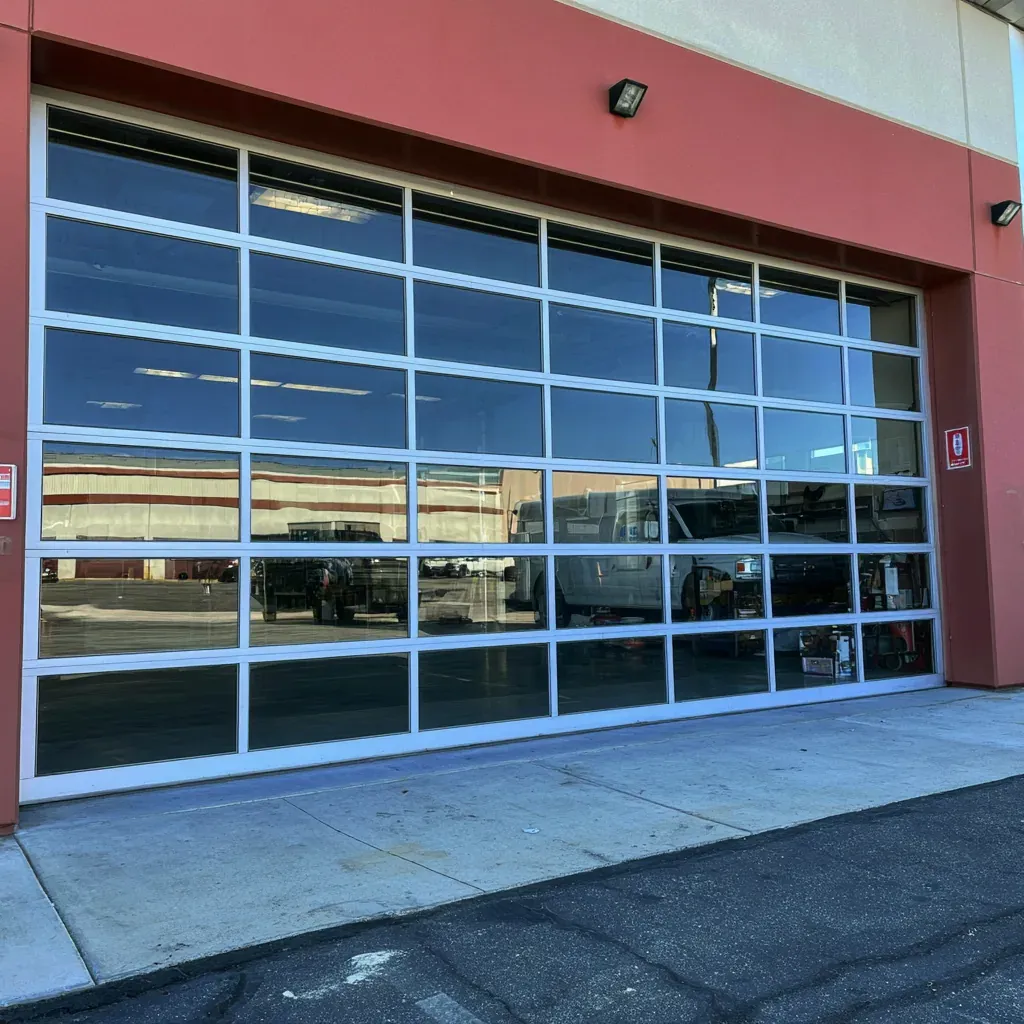
Where a Closed Door Meets the Frame in Oceanside
Four seals close four gaps: bottom, astragal, jamb stop, and the threshold underneath.
A garage door in Oceanside seals at four points: a bottom seal against the slab, stop molding on both jambs and the header, an astragal between double-door leaves, and a threshold strip where installed. Each fails on its own timeline from sun, salt air, or repeated flexing.
Bottom Seal and Retainer Wear
A garage door in Oceanside seals against four separate gaps, and each one wears its own part. Along the bottom edge sits a rubber or vinyl strip held by a retainer track that spans the panel. Above it, stop molding closes the side jambs, a center astragal meets the two door halves on a double-wide opener, and a threshold seal can bridge the slab where the concrete itself has settled unevenly near coastal soil.
Stop molding runs up both jambs and across the head, holding a vinyl bulb that the door face presses against when it closes. This perimeter seal blocks the draft that would otherwise slip in along the sides, not underneath. On an attached two-car garage in San Luis Rey or Loma Alta, a gap along one jamb often shows up as a cold draft near a workbench long before anyone notices the bottom seal has failed.
A double door adds a seam the bottom seal and stop molding cannot reach: the vertical line where two leaves meet in the center. The astragal covers that seam, mounted to one leaf so it overlaps the other when the door shuts. Without it, wind off the Pacific can push straight through the middle of a garage door in South Oceanside even when the bottom and sides look fine.
Astragal Between Double Doors
Vinyl bottom seal near the Oceanside coastline wears from UV exposure and constant flexing rather than cold, since a hard freeze practically never happens here. A door facing west toward Coast Highway takes direct sun for hours, and that same strip flexes downward and back on every cycle. Over time the vinyl stiffens, cracks along the crease, or pulls loose from the retainer entirely.
Stop molding takes a different beating than the bottom seal. Its vinyl bulb gets pinched between the jamb and the door face on every close, and years of that squeeze leave it flat, cracked, or pulling loose from the trim strip that holds it. Once it stops rebounding, light shows along the jamb with the door shut, and that same gap lets in dust blowing off Rancho Del Oro Drive or College Boulevard on a dry afternoon.
Threshold seals and astragals near the water face a different problem than sun. Salt air drifting in off the marine layer settles on hardware and slab edges in Downtown Oceanside and along The Strand, and it works into any metal fastener holding a seal in place. A threshold strip glued or screwed to the slab can lift at the edges once corrosion starts under the fastener, even while the vinyl itself still looks fine.
Stop Molding on the Jambs
The top seal closes the narrow gap above the door's uppermost panel, where the track brackets meet the header. It carries less water than the bottom seal but more wind pressure than most owners expect, since gusts push against the head jamb directly. On flatter lots through Ocean Hills and parts of Peacock, where a driveway sits close to level with the garage floor, that top gap is often the first place a draft is noticeable.
Oceanside's rain arrives in a short stretch, roughly December through March, and the yearly total stays modest, but storms can drop a hard burst rather than a steady soak. Heavy rain tied to the San Luis Rey River and Loma Alta Creek raises water at the curb faster than a slab seal can shed it. A threshold seal that is cracked or pulling away from the concrete lets that water track straight under the door instead of around it.
Threshold Seal at the Slab
A threshold seal lies flat against the slab rather than against the door, and it works alongside the bottom seal rather than replacing it. Where a driveway pitches slightly toward the garage, as on some older lots near Buena Vista Creek, this strip is what keeps runoff from following gravity straight across the floor. Once it separates from the concrete at one end, water finds that gap before it finds any other seal.
Storm season here runs short but hard, with most of Oceanside's roughly 10 inches of yearly rain falling between December and March. A seal that has gone stiff or pulled away from its retainer will let wind-driven water track under the door during one of those winter systems, soaking cardboard boxes or a workbench near the slab. Homes on lower ground near the San Luis Rey River see this fastest, since runoff pools at the driveway apron before it drains.
Seal Terms Worth Knowing
- Bottom seal: the strip riding in a retainer along the door's lower edge, the first line against slab moisture and drafts.
- Astragal: fitted to one leaf of a double door, closing the vertical gap between the two panels that no other seal reaches.
- Stop molding: the trim along both jambs and the head, carrying the perimeter seal that blocks driven rain and wind during winter storms.
- Threshold seal: a vinyl strip glued to slab concrete under the closed door, closing the low point neither bottom seal nor stop molding reaches.
- Perimeter seal: stop molding running up both jambs and across the header, sealing the door's face against the frame, not the slab.
- Retainer: the track holding the bottom seal onto the panel edge, letting a hardened or torn length come out without touching the astragal.
Frequently Asked Questions
How do I know my seal has failed?
Run a flashlight along the bottom edge with the door down and look for a bulb that has gone flat, split, or worked loose from its retainer. Then check both jambs and the header for daylight or a breeze while the door is shut. A double door needs a third check: press on the astragal seam between the two leaves to feel for give or a gap.
Does a new bottom seal stop flooding?
Not by itself. On flatter lots through Ocean Hills and Peacock, and on driveways poured close to level with the slab elsewhere in Oceanside, water and grit reach the door before a worn bottom seal even flexes. A threshold seal fixed to the concrete is what stops that water, and it fails independently of the door-mounted strip.
Is the astragal the same as the bottom seal?
No. The astragal closes the gap between two door leaves on a double-door opening, held by a bar or hinge along one panel's edge. The bottom seal is separate, riding in a retainer along the door's lower edge and pressing against the slab. Oceanside garages with double doors need both parts working.
Ready for a New Seal?
A worn bottom seal, cracked stop molding, or split astragal lets in driest air and driven rain alike — the licensed pros we connect you with fit the right replacement.
Call (760) 273-7064