Commercial Sectional & Overhead Doors
Oceanside Commercial
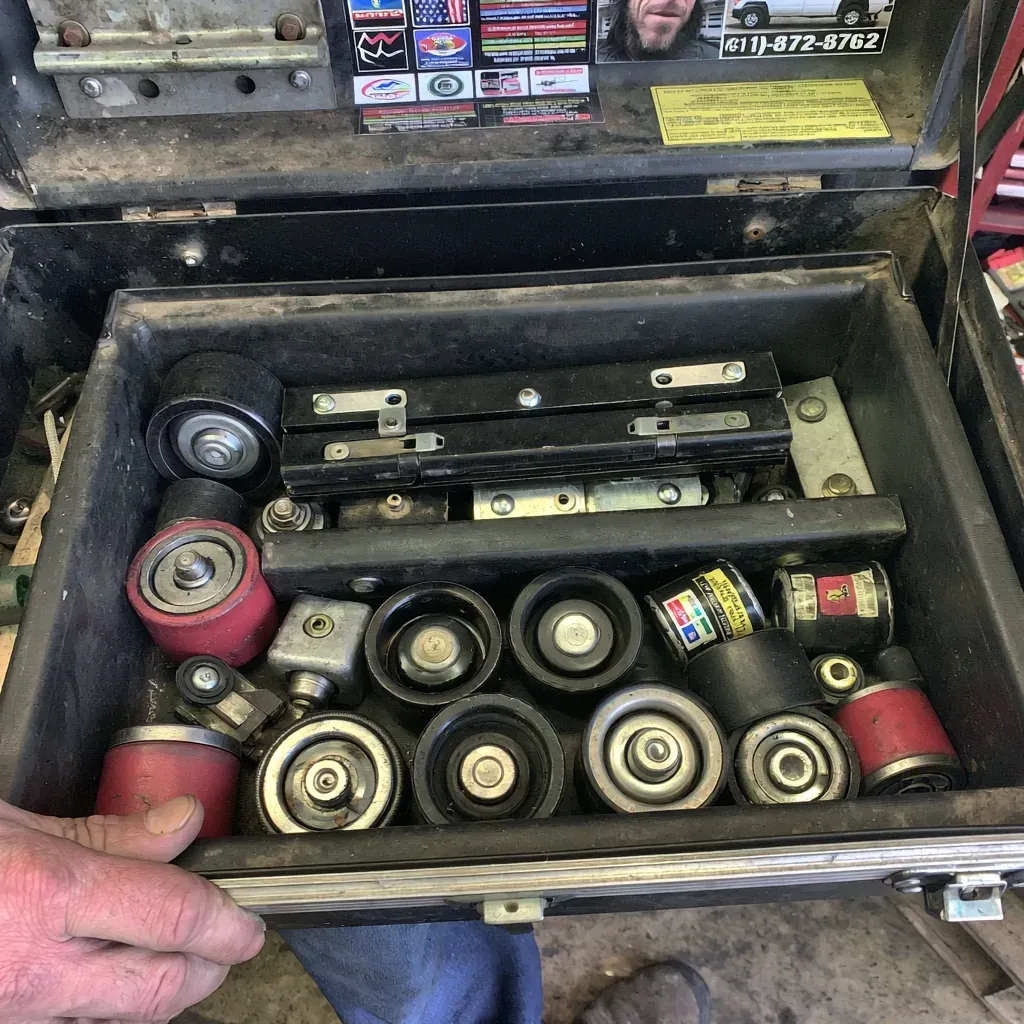
Visit frequency set by duty cycle, logged at every stop, priced ahead of failure.
A commercial maintenance contract in Oceanside sets visit frequency by duty cycle, logs spring, cable and roller wear at each stop, and holds priority response ahead of per-call customers so a facility budgets planned upkeep instead of guessing at the next breakdown.
A commercial door in Oceanside answers to a different clock than a homeowner's door across town. A bay door at a business off Rancho Del Oro Drive or a shop entrance near the Oceanside Transit Center opens and closes on a work schedule, not an errand schedule, and that schedule is the whole story of how fast it wears.
Downtime is the cost that a homeowner never faces. A stuck door at a house means parking on the street until someone gets to it. A stuck door at a warehouse near College Boulevard means a loading window missed, a delivery rerouted, staff standing around a bay that will not open. Oceanside businesses feel a stopped door as lost hours, not inconvenience.
A facilities manager weighing a maintenance contract in Oceanside is asking three things at once. How often does a door this busy need a technician to look at it. What happens when it fails on a Friday afternoon instead of a Tuesday morning. And does a set monthly cost beat paying for every breakdown as it comes, one invoice at a time.
A dock door at a distribution building near El Camino Real cycling dozens of times a shift wears nothing like a single bay door at a small office off Mission Avenue. The contract has to set its visit interval against actual use, not against a calendar default, or it is pricing the wrong door.
Set the interval too wide and a spring or a cable frays past the point of a clean fix, and the door stops mid-shift with a truck already waiting at the dock. Set it too tight and an Oceanside property is paying a licensed technician to look at hardware that has not moved since the last visit. The duty cycle is what gets that interval right.
| Duty Cycle | Service Interval | Doors Covered |
|---|---|---|
| Duty cycle tier | Typical setting | Suggested service interval |
| Low cycle | Storage unit near Rancho Del Oro | Annual inspection |
| Moderate cycle | Retail bay near Mission Avenue | Inspected each spring and fall |
| High cycle | Distribution dock near College Boulevard | Inspected every three months |
| Priority response | Waits behind whoever called first | Placed ahead of the general queue |
| Inspection log | Nothing recorded past the one fix | Written up and filed after each stop |
| Salt air corrosion check | Caught only after a spring rusts through | Checked at every scheduled visit |
| How the price gets set | Set by whatever part failed that day | Set by door count and visit interval |
Duty cycle is the number of times a door opens and closes across a working day, and it is the figure a contract should be built around rather than a fixed monthly date. A high-cycle door at a busy loading area needs a technician's eyes far more often than a door that opens twice a day at a small storefront near Downtown Oceanside.
An inspection log is the record kept from one visit to the next: spring tension, cable wear, track alignment, and whether the opener's force settings still match what the door needs. Without one, every service call starts from zero, with a technician guessing at a history nobody wrote down.
With a log in hand, a pattern shows up before it becomes a breakdown. A roller wearing faster than expected, a cable fraying ahead of schedule, a track pulling slightly out of line near one bracket. For a property owner near San Luis Rey or the San Luis Rey River corridor, that same log can back up a claim to an insurer that upkeep was actually done.
Priority response is the second half of what a contract buys, separate from the inspection schedule itself. A property under contract does not sit behind a same-day emergency call from someone with no agreement in place. That ordering is worth more than it sounds like on paper once a door actually stops working.
It matters most where a stopped door blocks something larger than itself. A loading dock feeding a business near Oceanside Boulevard, a shop entrance that customers cannot get past, a gate at a property near Camp Pendleton that controls who gets in. A contract puts that call ahead of the walk-in list instead of behind it.
A maintenance contract prices against the service interval instead of the breakdown. Each visit, sized to the duty cycle of that particular door, is a known cost set months ahead rather than a surprise invoice after a failure. That is the trade a facilities manager in Oceanside is actually making when signing one.
A door checked on a locked schedule tends to cost an Oceanside property less across a year than one left alone until it quits. Springs, cables, and rollers get replaced on a technician's terms, during a planned visit, instead of on the door's terms, in the middle of a shift, with a truck backed up at the dock waiting.
Salt air off the Pacific is the local variable that changes this math for a property near Coast Highway or The Strand. Galvanized track hardware and hinge pins still corrode faster this close to the ocean than they would a few miles inland toward San Marcos or Escondido, and that corrosion runs quietly until a part gives out.
A scheduled visit is where that corrosion gets caught early. Checking a bottom bracket for pitting, confirming galvanized hardware is holding up, and clearing residue off tracks near a coastal-facing bay door all cost far less than replacing a rusted spring or cable after it fails mid-cycle on a working property.
A per-call rate in Oceanside covers one breakdown and stops there, and the invoice usually lands after a door has already held up a delivery near College Boulevard or a shift at a warehouse off Oceanside Boulevard. A contract prices the same work ahead of time, spread across scheduled stops instead of one emergency line item billed after the fact.
Most garage doors sit at grade level, right where a home's slab foundation meets the driveway. Any shift in that slab, even a small one, changes how square the frame is and how the door tracks against it. It's a quiet kind of wear, felt as friction before it's ever seen.Fallbrook, Bonsall and Camp Pendleton. A garage door opener that runs but won't fully close is often a sensor problem, not a motor one. Dust or a stray cobweb across the safety-eye lenses reads as an obstruction, so the opener reverses out of caution every time it's asked to shut the door.
Garage doors here rarely fail from one obvious cause. Hardware wears on cycle count, hinges loosen from repeated motion, and hidden corrosion sets in long before a panel or spring finally gives out, so the door that quit this morning was likely failing for months before anyone noticed.Figures assume one attached two-car garage door on a slab foundation, typical of Rancho Del Oro or Ivey Ranch tract homes. Detached garages, raised-floor construction near Fire Mountain, or a second door for a boat or RV pad usually cost more and need a separate look. Full guide bands are on the pricing guide, and the commercial overview covers how a scheduled program works.
Oceanside Commercial
Commercial Operators
Dock doors, Oceanside
A maintenance contract sets how often a door gets checked based on actual use, not a fixed date. A bay near El Camino Real cycling most of a shift gets checked more often than a low-traffic door at an office park off Oceanside Boulevard, and each visit is written into the property's inspection log.
Duty cycle is how many open-close movements a door and its opener handle across a business day, not how long the equipment has been installed. A dock running most of a shift near College Boulevard wears springs and rollers far faster than one opened a handful of times, which sets how often it needs a visit.
Priority response means a contracted Oceanside property gets scheduled ahead of anyone calling in without an agreement once a door fails mid-shift. A warehouse near Rancho Del Oro Drive under contract gets a technician dispatched before a same-day caller with no agreement in place.
It depends on duty cycle. A bay near El Camino Real that opens only a few times a day may still cost less paying per call. A dock cycling most of a shift near College Boulevard almost always costs less under a contract once after-hours callouts and repeat visits are counted.
Running a door near Rancho Del Oro or Mission Avenue on a daily schedule? Call to set up an inspection with the licensed pros we connect you with.
Call (760) 273-7064